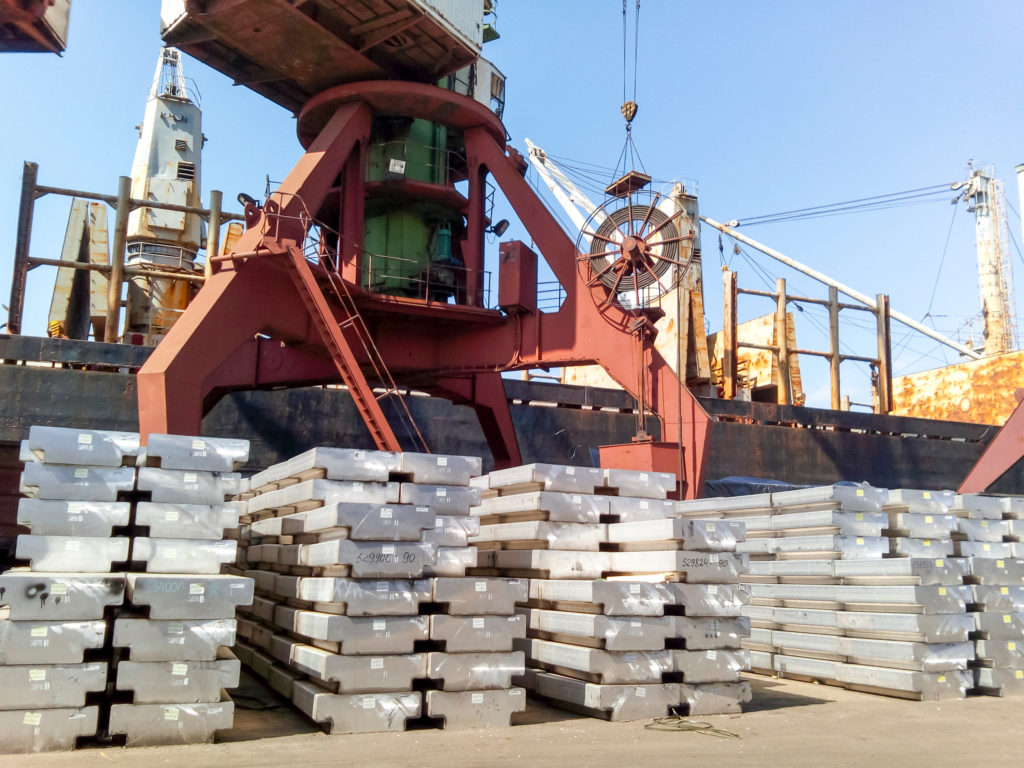
Aluminum ingots. Stock image.
Canadian Energy Metals (CEM) has announced the results of its preliminary economic assessment (PEA) for its Thor project in Saskatchewan, outlining the potential for Canada’s first major domestic alumina resource.
The PEA envisions a surface mining and processing operation with an average throughput of 16.5 million tonnes per year, supporting alumina production of 1.8 million tonnes per year over a 25-year project life. This is based on a resource estimate covering 23% of the property, containing 6.8 billion tonnes of alumina in the measured and indicated category.
“This PEA confirms that the Thor project is a possible game-changer for North America’s aluminum supply chain,” CEO Christopher Hopkins said in a Jan. 29 news release. “Our next focus is to engineer a demonstration facility while moving Thor towards commercialization.”
CEM has so far successfully produced two types of alumina through ongoing piloting efforts: 3N chemical-grade alumina (CGA) and 4N high-purity alumina (HPA). The company is conducting additional testing on the deposit’s polymetallic nature, focusing on smelter-grade alumina, scandium and vanadium.
The PEA model assumes initial capital expenditures of $6.3 billion, operating costs of $1.6 billion per year, and product price assumptions of $5,000 per tonne for CGA and $25,000 per tonne for HPA. The projected internal rate of return is 72%, with a net present value of cash flows at $72.3 billion (discounted at 10% after-tax).
“The Thor project discovery pairs our province’s pro-mining investment policies with a substantial geological advantage. We’re excited about the prospect of a new alumina industry setting up shop in our province, where people are ready for more jobs and investment from around the world,” Saskatchewan Premier Scott Moe said in a statement.
This year, the company plans to advance the project further by updating the mineral resource and confirming its potential for new products and by-products, with the expectation of releasing a prefeasibility study.