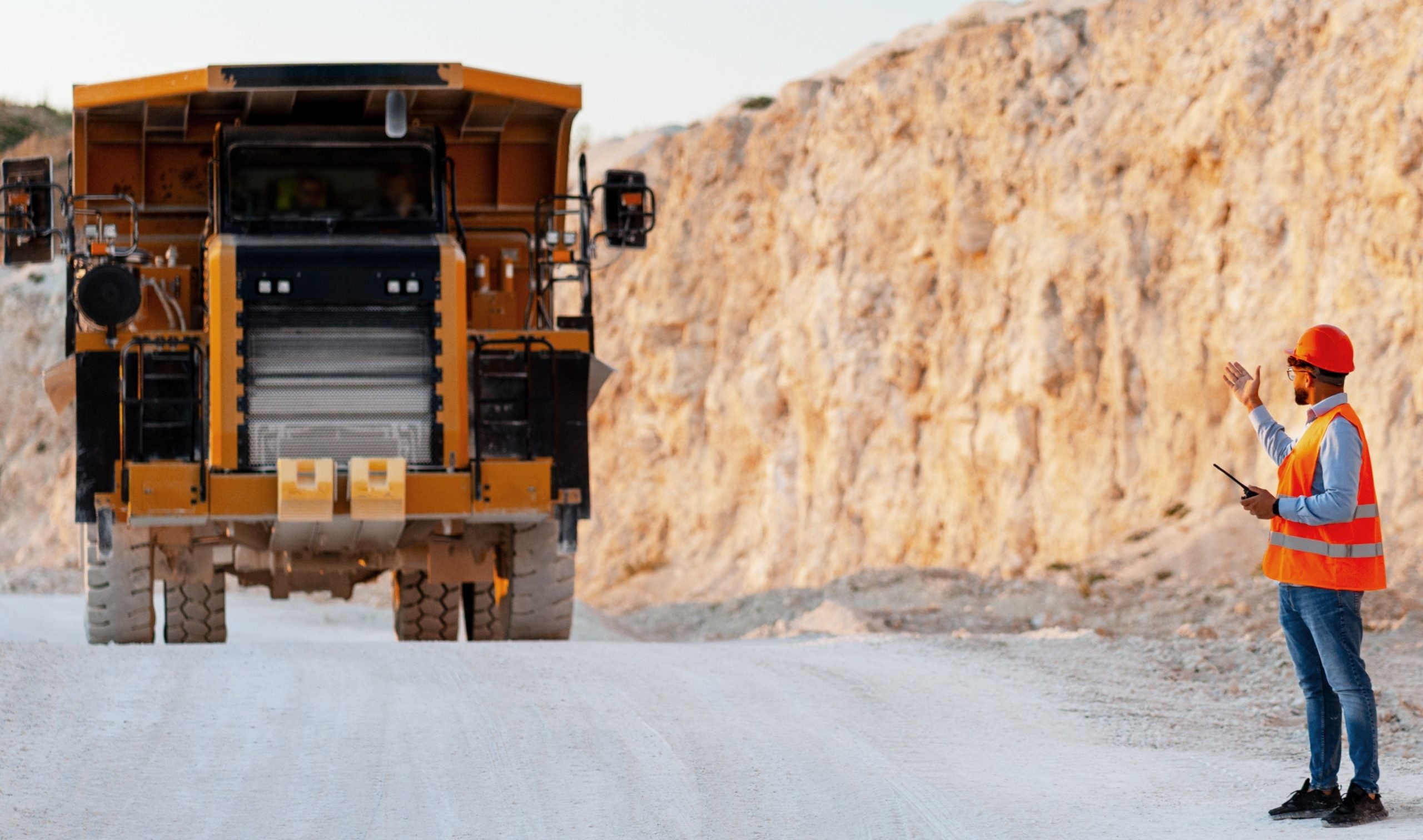
The mining industry is at a crossroads. Global demand for critical minerals, like lithium, copper, nickel, and rare earth elements, is set to nearly triple by 2030 and quadruple by 2040. Meeting this demand isn’t just about extracting more—it’s about mining smarter, safer, and more sustainably.
Private 5G is emerging as a foundational technology to achieve transformation for the mining industry. It delivers the industrial-grade connectivity required to power automation, real-time analytics, remote operations, and advanced safety systems. But for mine operators, two practical questions remain:
- How do you begin a private 5G trial?
- Once proven, how do you scale it across your site?
Why connectivity is mining’s critical enabler
Mining operations face mounting pressure to reduce costs, improve ESG performance, protect workers, and guard against cyber and physical threats. In environments where downtime can cost millions, connectivity isn’t optional—it’s mission-critical.
Legacy networks such as Wi-Fi or leaky feeders can’t keep pace with the demands of smart mining. Private 5G changes that equation. It brings:
- Robust, wide-area coverage (surface and underground)
- Ultra-low latency and reliability for open-pit connectivity for fleets, drones, and worker systems.
- Seamless mobility for autonomous fleets and connected workers in harsh environments of dust, vibration, and extreme temperatures.
- Strong security for mission-critical data
It’s not just about connectivity today—it’s about building the digital foundation for tomorrow.
Our latest white paper addresses how to begin a private 5G trial and how to scale it across the site in five distinct steps, offering a clear roadmap for mining companies ready to embrace the next generation of connectivity.
Five steps for a successful private 5G deployment
- Start with ecosystem collaboration
Private 5G deployment isn’t a one-company effort. It requires alignment across:
- Connectivity providers (Ericsson for the core network technology)
- Equipment manufacturers (Caterpillar, Komatsu, Epiroc, Sandvik)
- System integrators (Becker, Ambra, and others who tailor integration)
Spectrum access is also critical. Countries like the U.S., Germany, Australia, Chile, and Brazil have already allocated industrial spectrum, setting the stage for reliable deployments.
- Pilot with purpose
Mining pilots are less about proving that 5G works—and more about proving its value. A typical pilot follows four stages:
- Use case selection – Focus on high-impact scenarios (autonomous trucks, real-time video, safety systems).
- Ecosystem coordination – Engage partners to design fit-for-purpose solutions.
- Dry testing – Validate off-site before deployment.
- Evaluation – Measure against operational and business KPIs.
- Scale intelligently
After a successful pilot, scaling can take different forms:
- Full-site deployment for rapid transformation.
- Phased rollout, often one production face at a time, aligned to milestones.
Planning with scalability in mind ensures new use cases can be added quickly as they emerge.
- Manage change and adoption
Successful deployment isn’t just technical—it’s cultural. Clear communication from leadership that private 5G enhances safety, job quality, and innovation (not workforce reduction) is essential. Collaboration between IT, operations, and network teams smooths the transition.
- Maintain for the long haul
Once live, networks require monitoring, updates, and cybersecurity vigilance. Many mines adopt a hybrid model—keeping critical data on-site while enabling secure remote access for diagnostics and support.
Building a roadmap for mining’s future
As mining moves rapidly toward autonomy and intelligence, private 5G is emerging as a foundation for the industry’s future. The question is no longer if it will be adopted, but when.
Operators who act now are already realizing the benefits—greater safety, less downtime, and higher productivity. The journey to smarter, safer, and more sustainable mining starts with one decision: to connect with the power of private 5G.
Ready to get started?
Download the full paper below for a practical guide to operationalize mining in both greenfield and brownfield sites.